Why Early-Stage Hard-Tech Founders Should Stop Building Factories.
Building factories before scale locks founders into fixed costs and operational debt. Vertical integration is inevitable but almost always arrives too early.
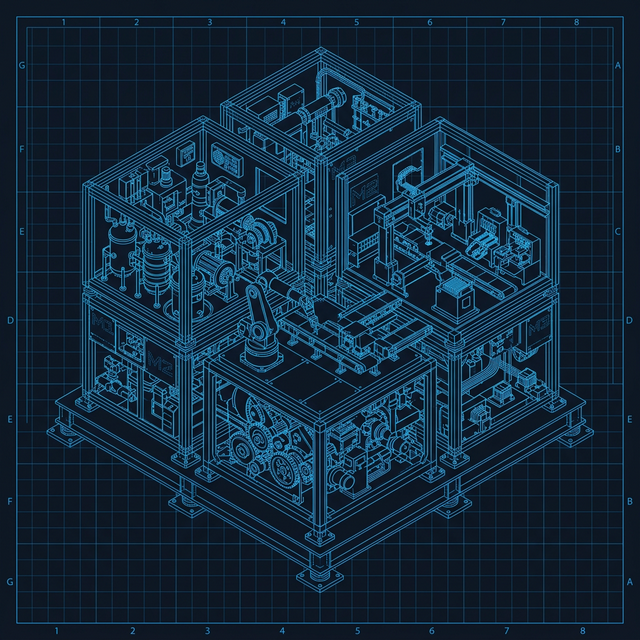
Building a factory feels like progress. In reality, it is often the fastest way to stall an early-stage hard-tech company.
This analysis addresses the question founders rarely ask soon enough: when does owning physical manufacturing infrastructure become rational, and when does it quietly destroy focus, flexibility, and equity? The thesis is direct: premature factory ownership is almost always a capital trap rather than a competitive moat.
The Myth of Early Vertical Integration
Founders are frequently told that vertical integration is inevitable. That is true. What is rarely discussed is timing and sequence.
Factory ownership makes economic sense when demand visibility is multi-year, production margins absorb heavy fixed depreciation, and product architectures are frozen. Early-stage companies possess none of these conditions. Yet founders rush to build facilities anyway: often as an emotional reaction to a single bad experience with an outsourced vendor.
The reaction is understandable. The capital allocation is disastrous.
Fixed Costs Kill Strategic Optionality
Factories convert liquid capital and strategic agility into rigid permanence.
Once established, facilities demand continuous utilization. Underutilized capacity bleeds cash every month in rent, power, tooling maintenance, and overhead. Overutilized capacity forces rushed, unplanned facility expansions. In both scenarios, leadership loses strategic freedom.
Optionality: the ability to pivot architecture, adjust timelines, or reallocate cash: is the single most valuable asset an early-stage company has. Early factories eliminate it.
The Opportunity Cost No One Models
Building internal manufacturing capability demands immense hidden resources:
- Millions in upfront capex that could have funded engineering talent, software development, or customer flight heritage.
- Executive attention diverted from mission requirements to building permits, environmental audits, and safety compliance.
- Fixed labor overhead hired months ahead of predictable, contract-backed volume.
These expenses rarely appear in pitch deck models, but they compound silently. Founders become plant supervisors before their product has achieved true market validation.
Access Beats Ownership Early
What emerging hard-tech companies need is not deeded property: they need secured capacity. Strategic access delivers:
- Production velocity without fixed balance-sheet overhead.
- Advanced manufacturing capability without millions in capex debt.
- Rapid design iteration without sunk-cost tooling lock-in.
Ownership belongs later in the lifecycle: once scale is proven, unit economics are durable, and program volumes are locked. Until that inflection point arrives, premature factories are dead ballast.
When Factory Ownership Actually Makes Sense
Building dedicated in-house factories becomes rational only under strict criteria:
- Demand visibility extends across multi-year, funded government or commercial production contracts.
- Product gross margins comfortably absorb capital equipment depreciation and facility carrying costs.
- Manufacturing processes, tooling, and test fixtures are fully qualified, stable, and repeatable.
- The risk of unaligned external supply chains genuinely exceeds the risk of fixed operating overhead.
Until those conditions are proven, founders should resist the urge to pour concrete.
The Strategic Alternative
The winning approach is deliberate sequencing: secure dedicated manufacturing capacity through aligned foundry partners, borrow operational maturity, and preserve founder focus.
Founders who sequence manufacturing intelligently raise significantly less dilutive capital, compress cycle times, and retain the balance-sheet strength to vertically integrate when scale justifies it.
Build companies, not buildings.