Manufacturing Capacity Is the New Equity.
In hard tech: capital no longer defines who wins. Manufacturing capacity does. Founders who treat capacity as equity scale faster and dilute less.
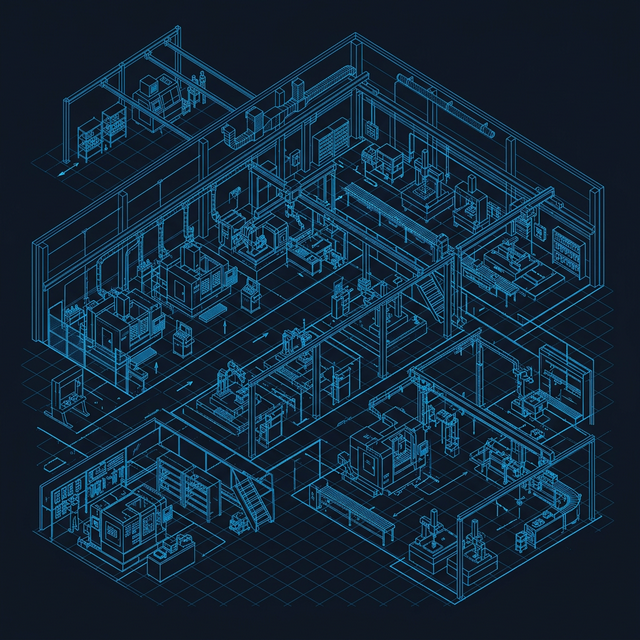
Hard-tech companies do not fail because they run out of ideas: they fail because they cannot build fast enough when demand arrives. In today's environment, capital is no longer the defining constraint: manufacturing capacity is.
This analysis answers a simple but uncomfortable question: why do well-funded hard-tech startups stall at scale while smaller competitors break through? The thesis is direct: manufacturing capacity now behaves like equity, and founders who treat it as such scale faster, dilute less, and survive market shocks.
The Venture Assumption That No Longer Holds
For decades, venture capital assumed execution was elastic. Software companies could scale by adding servers and engineers. Hardware was treated as a slower variant of the same model.
That assumption breaks the moment physical production enters the picture. Factories cannot be spun up overnight. Skilled labor cannot be hired instantly. Tooling lead times, qualification cycles, and supplier dependencies introduce friction that capital alone cannot eliminate.
In hard tech, the bottleneck is no longer invention: it is throughput.
Why Capacity Functions Like Equity
Equity exists to accelerate growth and absorb risk. Manufacturing capacity does both.
When capacity is secured: revenue arrives earlier, customer commitments become credible, emergency fundraising becomes less likely, and founder ownership is preserved.
When capacity is scarce: timelines slip, costs inflate, and founders raise capital under extreme pressure.
The economic effect mirrors dilution. A company that cannot ship must raise more capital on worse terms, even if customer demand is real. Capacity, therefore, operates as a non-dilutive growth instrument.
Time Compression Is the Hidden Multiplier
The most valuable effect of capacity is time. Access to qualified manufacturing shortens design-for-manufacturing (DFM) cycles, validation testing, and production ramps. These time savings compound across the business:
- Earlier revenue recognition and faster cash flow generation.
- Accelerated customer proof points and on-orbit or field deployment.
- Stronger negotiating leverage and valuation protection in future funding rounds.
A six-month acceleration in revenue can outweigh millions in valuation optics. Founders routinely underestimate how quickly time becomes the most expensive variable in hard tech.
Capacity as Downside Protection
Manufacturing risk rarely appears on pitch decks, but it dominates hard-tech failure modes.
Supplier reprioritization, geopolitical shocks, precision labor shortages, and tooling delays routinely force startups into emergency financing. These are not theoretical risks: they are recurring structural patterns.
Secured capacity shifts these risks from existential to manageable. That risk reduction alone justifies treating capacity as balance-sheet infrastructure rather than variable operational overhead.
The New Competitive Moat
In constrained markets, access beats ownership.
Companies with guaranteed production slots win major commercial and defense programs even when competitors claim superior lab prototypes. Delivery certainty becomes the defining differentiator. Capacity becomes a defensive moat that is expensive to replicate and impossible to fake.
Founders who secure manufacturing capacity early compound their operational advantage while competitors scramble reactively.
What Founders Must Do Differently
Treat manufacturing decisions as capital allocation, not procurement. Evaluate every production partnership through three questions:
- Does this capacity accelerate the path to revenue?
- Does it protect founder equity and reduce dilution risk?
- Does it secure schedule credibility with mission-critical customers?
If the answer is yes, it deserves the same strategic rigor as any primary capital raise.
The New Equity Is Physical
In hard tech: factories, precision engineering talent, and qualification capacity determine who scales and who stalls.
Capital is necessary. Capacity is decisive. Founders who internalize this reality earlier build stronger companies with cleaner ownership, proven delivery, and fewer points of failure.